Revolutionizing English Language Teaching: How AI is Reshaping Classrooms and Careers Artificial intelligence is rapidly transforming the landscape of English language teaching, offering powerful new tools for both educators and…
Are you ready to take your TESOL career to the next level? Teaching IELTS is one of the most in-demand specializations for English teachers worldwide, offering rewarding work and higher…
Ready to turn your classroom into a high-energy language lab—no tech required? Join American TESOL Institute and the one-and-only Fluency MC (Jason R. Levine) on June 17th at 10 AM…
https://youtu.be/4olZE9Kz-34?si=DJW-D3ID74X9t3vP If you’re a fan of first-person travel vlogs or high-energy livestreams, you’ve probably stumbled across CJayride, a Twitch-partnered content creator who’s been motorbiking across Asia since 2017. Known for…
Feeling like a fish out of water when people start hurling English idioms and phrasal verbs at you faster than a runaway train? Don’t throw in the towel just yet—buck…
As TESOL teachers, we constantly seek innovative ways to engage our students, bridge cultural divides, and enrich their understanding of the world – and the English language. This article proposes…
Learning a new language is an adventure—one full of curiosity, excitement, stumbling blocks, and ultimately, immense growth. By weaving colors, shapes, and scents into a structured journey, you can transform…
Mentolinguism is a teaching method that leverages mental and subconscious processes, like ideomotor responses and intuitive cognition, to enhance English language learning. By blending mentalism and linguistics, it fosters a…
The Cognitive Motivation Engine (CME) is a framework designed to supercharge English language acquisition by tapping into the learner’s subconscious drive. Instead of relying on external rewards or pressure, CME…
Do you ever wonder why some language learners seem to progress faster and enjoy the process more? The secret ingredient might just be curiosity! The Science Behind Curiosity Curiosity isn't just…
Non-Fungible Tokens (NFTs) have taken the world by storm, with most people associating them with art, collectibles, and digital media. But their potential in education—particularly in English language learning—is just…
In every classroom, a balance between conformity and individuality is crucial for students to thrive. While diversity is valuable, shared expectations and norms create a structured, productive learning environment. In…
In the ever-evolving landscape of human development, Erik Erikson's groundbreaking psychosocial theory remains a cornerstone for understanding how individuals navigate the complexities of life. However, the world has transformed dramatically…
What makes a truly effective teacher? While there's no one-size-fits-all answer, research consistently reveals key principles that lead to better student outcomes and inspire a lifelong love of learning. 1.…
Howard Gardner's theory of multiple intelligences revolutionized our understanding of human intellect, but it isn't the only model exploring the diverse ways people think and learn. Several other types of…
Erik Erikson's theory of psychosocial development outlines eight stages individuals pass through from infancy to adulthood. Each stage involves a unique challenge or crisis that shapes our identity and influences…
Telegraphic speech, also known as "text message speech," is a stage in early language development where children use simple two-word phrases to communicate. It resembles a telegram, conveying the essential…
Learning English as a second language can feel daunting, but what if you could tap into the hidden power of your subconscious mind? Psycholinguistics, the study of how our minds…
The lexical approach offers a refreshing perspective on TESOL (Teaching English to Speakers of Other Languages). It shifts the focus from memorizing grammatical rules to acquiring meaningful chunks of language,…
Connectionist philosophy presents an alternative viewpoint on how we learn language. Unlike traditional theories emphasizing rules and memorization, Connectionism proposes that we acquire language through complex networks of associations, shaped…
Classroom discipline is a constant challenge for educators, and establishing effective strategies is key to creating a positive learning environment. While traditional disciplinary measures are sometimes necessary, there's growing emphasis…
The core idea, drawn from classical conditioning, is simple: by consistently pairing a neutral cue (like a sound or gesture) with a specific idea, feeling, or action, you can help…
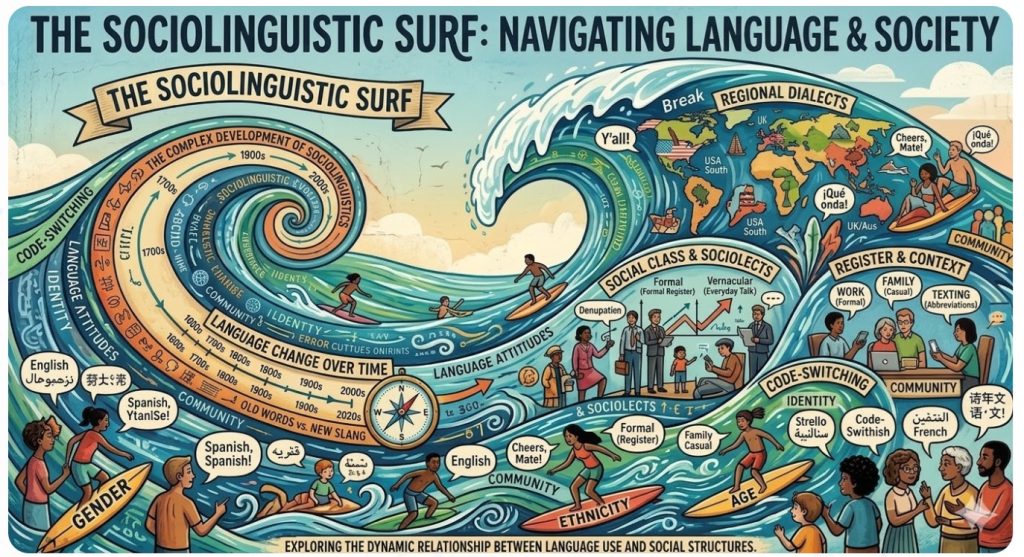
For ESL teachers, fostering effective communication goes beyond grammar and vocabulary. Sociolinguistics, the study of the relationship between language and society, equips teachers with valuable insights to create a more…