English as a Second Language (ESL): Teaching & Learning Guide
English as a Second Language (ESL) commonly refers to learning or teaching English when English is not the learner's primary language. ESL education can support learners who need English for everyday communication, education, employment, travel, community participation, or personal goals.
Effective ESL teaching goes far beyond memorizing grammar rules and vocabulary lists. Language develops through meaningful listening, speaking, reading, writing, interaction, feedback, practice, and opportunities to use English for real purposes.
English as a Second Language: Quick Facts
- ESL meaning: ESL stands for English as a Second Language.
- Core language skills: Listening, speaking, reading, and writing.
- Language systems: Vocabulary, grammar, pronunciation, spelling, discourse, and appropriate language use.
- Learners: Children, adolescents, university students, immigrants, professionals, travelers, and adults can all be English language learners.
- Teaching approach: Effective instruction connects language forms with meaningful communication and learner goals.
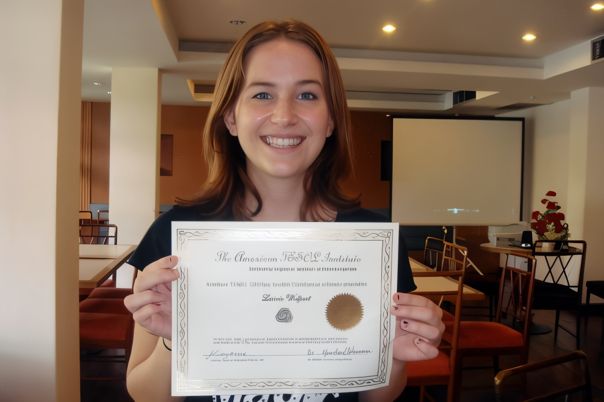
- Teacher preparation: TESOL training can prepare educators to plan lessons, teach language skills, assess learning, and adapt instruction.
What Does ESL Mean?
ESL is an established term in English language education. It is often used when learners are studying English in an environment where English is widely used around them, although actual terminology varies across schools, countries, educational systems, and professional communities.
Other terms include EFL (English as a Foreign Language), ELL (English Language Learner), EL (English Learner), and TESOL (Teaching English to Speakers of Other Languages). These terms overlap, but they are not always interchangeable.
What Do ESL Students Learn?
English proficiency involves multiple interconnected skills. A well-designed ESL program balances these areas according to learner proficiency, age, context, and goals.
- ListeningLearners develop the ability to understand spoken English in conversations, lessons, presentations, media, and everyday situations.
- SpeakingStudents practice pronunciation, fluency, interaction, vocabulary, grammar, and communication strategies for meaningful conversation.
- ReadingInstruction can develop comprehension, vocabulary, reading strategies, interpretation, and the ability to work with different kinds of texts.
- WritingLearners develop skills ranging from sentences and everyday messages to paragraphs, essays, reports, academic writing, and professional communication.
- Vocabulary and grammarLanguage forms become more useful when students encounter and practice them in meaningful contexts rather than only as isolated rules.
- PronunciationPronunciation instruction can focus on intelligibility, individual sounds, word stress, rhythm, connected speech, and intonation.
ESL Teaching Is More Than Grammar and Vocabulary
Grammar and vocabulary matter, but knowing language forms does not automatically mean a learner can communicate effectively. Students also need opportunities to interpret meaning, negotiate misunderstandings, express ideas, listen to others, and use language appropriately in different situations.
A TESOL teacher can turn language objectives into communicative experiences through role-plays, projects, discussions, storytelling, problem-solving, games, presentations, collaborative tasks, authentic materials, and educational technology.
Creating Engaging ESL Lessons
Engagement is strongest when activities have a clear learning purpose. A fun activity is not automatically an effective lesson; teachers should connect each task to an objective and consider what students will understand or be able to do afterward.
- Start with a clear objectiveDefine the language or communication outcome before selecting an activity.
- Activate prior knowledgeConnect new language to what learners already know about the topic, language, or situation.
- Provide comprehensible modelsUse examples, demonstrations, visuals, context, and appropriately graded language.
- Create opportunities for interactionGive learners meaningful reasons to speak, listen, read, write, ask questions, and respond.
- Give useful feedbackBalance correction with communication so students understand how to improve without making every interaction a test.
- Review and recycle languageReturn to important vocabulary and structures across different contexts to strengthen retention and flexible use.
Teaching ESL to Diverse Learners
English language learners differ in age, proficiency, educational background, literacy, motivation, first language, previous language-learning experience, goals, interests, and access to technology. Effective teachers adapt instruction without assuming that all members of a cultural or linguistic group learn in the same way.
Diversity can also become a learning resource. Students can compare perspectives, share experiences, examine how communication differs across contexts, and learn to interact respectfully with people whose backgrounds differ from their own.
Culture and English Language Teaching
Language and culture are connected, but teaching culture requires care. ESL educators can help learners understand idioms, social conventions, register, humor, communication styles, and contextual meaning without presenting any culture as uniform or treating one variety of English as inherently superior.
Students can also bring their own languages and cultural knowledge into the classroom. Multilingual awareness can support comparison, reflection, identity, and deeper understanding of how languages work.
Building Confidence and Learner Independence
Language learning involves uncertainty and experimentation. Learners need opportunities to try new language, make mistakes, receive feedback, notice patterns, and try again. A supportive classroom encourages students to participate before their English is perfect.
Teachers can also develop learner independence by showing students how to set goals, monitor progress, use dictionaries and digital tools effectively, practice outside class, evaluate resources, and reflect on which strategies help them learn.
ESL, EFL, and TESOL: What's the Difference?
ESL and EFL commonly describe English learning or teaching contexts. TESOL means Teaching English to Speakers of Other Languages and is widely used as an umbrella term for the professional field.
Regardless of terminology, effective English language teaching requires attention to learners, context, objectives, language development, assessment, and meaningful communication.
TESOL Certification for ESL Teachers
TESOL teacher training can help educators develop practical skills in lesson planning, teaching methodology, classroom management, assessment, pronunciation, grammar, vocabulary, and the teaching of listening, speaking, reading, and writing.
Explore American TESOL Institute certification programs for professional preparation in teaching English to speakers of other languages.
Ready to begin? Register for TESOL certification and develop practical skills for teaching English online and abroad.
English as a Second Language FAQ
What does ESL mean?
ESL stands for English as a Second Language. The term is commonly used for English language learning and instruction for people whose primary language is not English, although terminology varies by educational setting and region.
What skills are taught in ESL?
ESL instruction commonly develops listening, speaking, reading, and writing along with vocabulary, grammar, pronunciation, communication strategies, and language appropriate to academic, professional, or everyday contexts.
What is the difference between ESL, EFL, and TESOL?
ESL and EFL commonly describe English learning or teaching contexts, while TESOL means Teaching English to Speakers of Other Languages and is an umbrella term used for the professional field of English language teaching.
How does TESOL certification help ESL teachers?
TESOL training can help teachers develop practical skills in lesson planning, language teaching methodology, classroom management, assessment, teaching language skills, and adapting instruction for different learners and contexts.